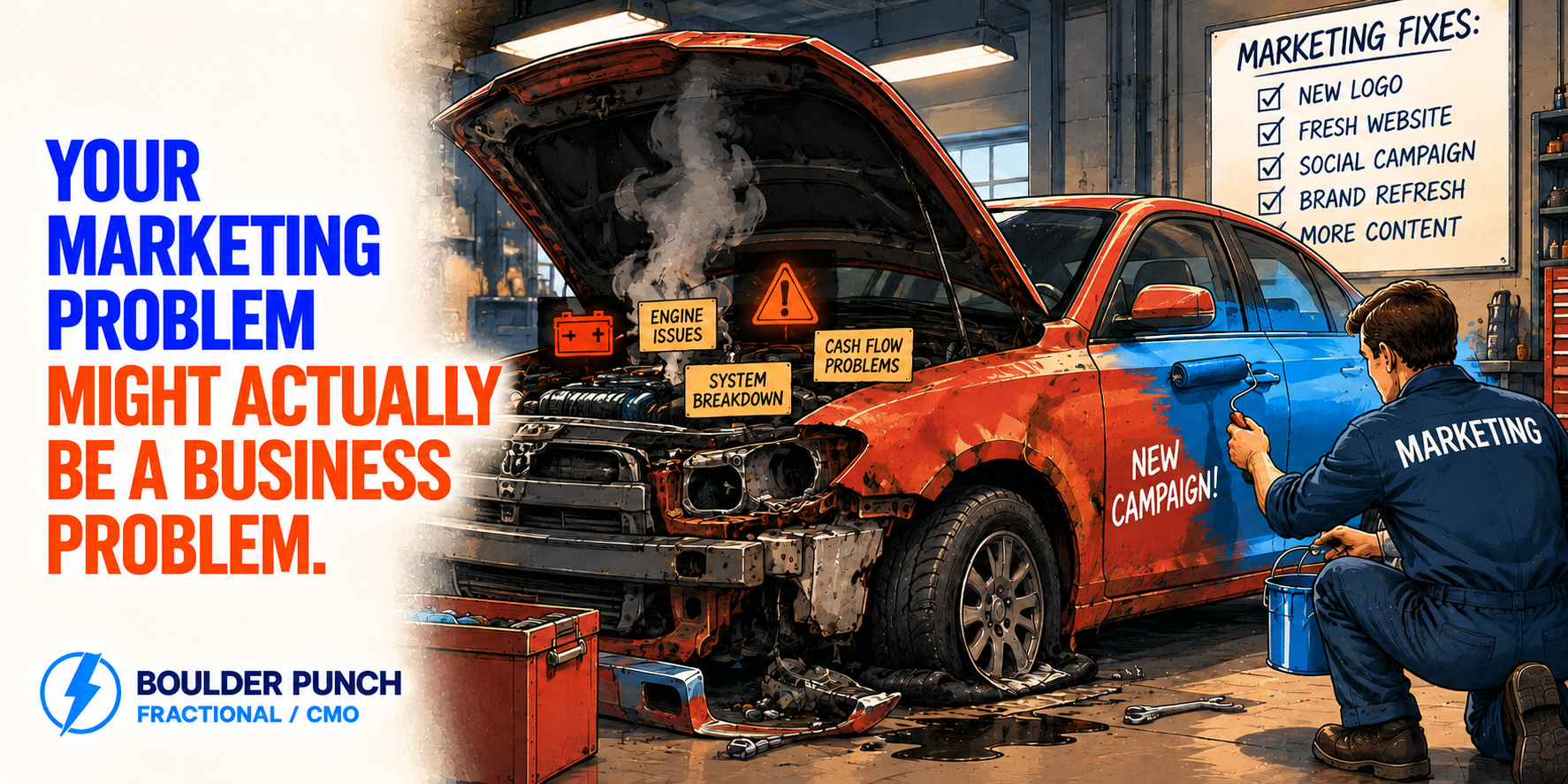
Your Marketing Problem Might Actually Be a Business Problem
One of the reasons companies sometimes avoid them is that campaigns are easier to change than businesses. It's relatively straightforward to redesign a landing page, increase advertising, hire an agency, or launch a new content program. It's much harder to acknowledge that pricing needs to change, the sales process is broken, the product needs work, customer service is under-resourced, or the market has evolved beyond the company's original positioning.
Marketing activity creates visible motion. Solving the underlying business problems can require decisions nobody particularly wants to make.

Valentine's Day: Your Customers Just Aren’t That Into You
We need to talk.
I know things seemed great in the beginning. You called all the time. You listened. You remembered what mattered to me. You sent helpful information and seemed genuinely interested in my problems. You introduced me to people who could help and checked in just to see how things were going.
You really made an effort.

NEW YEAR’S EVE: This Year, Resolve to Stop Doing Something
I’ve never been particularly good at New Year’s resolutions.
Maybe it’s because most of them involve giving up something I enjoy or committing to something I already know I should be doing. Exercise more. Eat better. Drink less. Read more. Finally organize that part of the basement where things apparently go to disappear forever.
Business resolutions aren’t much different.
Every January, we start thinking about what we’re going to do more of.

Christmas: All I Want for Christmas is a Marketing Plan that Matters
’Twas the night before planning, and all through the place,
Not a marketer stirred, after Q4’s mad race.
The dashboards were hung on the monitors with care,
In hopes that some useful insight soon would appear.
The sales team was nestled all snug in their beds,
While visions of qualified leads danced in their heads.
The CEO dreamed of explosive new growth,
With half of the budget, while somehow doing both.

THANKSGIVING: Sometimes Thank You Is a Better Marketing Strategy Than Another Campaign
Thanksgiving is usually when companies remember to tell customers how thankful they are.
The emails arrive right on schedule. Thank you for your business. Thank you for your trust. We couldn’t do it without you. There will probably be autumn leaves somewhere in the design.
There’s nothing wrong with saying thank you. I appreciate hearing it myself.
But there’s a big difference between telling customers you appreciate them and doing something that makes them feel appreciated.

HALLOWEEN: Zombie Marketing: The Undead Still Roaming Your Marketing Landscape
I was a fan of The Walking Dead, particularly the earlier seasons when the walkers were still the biggest problem and before I needed a family tree and organizational chart to remember which human faction was trying to kill which other human faction.
One thing I always liked about the show was that the zombies weren’t particularly complicated. Individually, most of them weren’t even that formidable. The real danger came when nobody dealt with them.

Buying the Tool Isn’t the Same as Building the Capability
Marketing has never had more technology available to it than it does today. CRMs, marketing automation platforms, analytics tools, ABM platforms, sales enablement systems, content tools, intent data, customer data platforms, AI applications, personalization engines, and an endless collection of specialized software promise to make marketing faster, smarter, more efficient, and more measurable.

Everyone Wants to Stand Out. Until Standing Out Feels Uncomfortable.
A visual direction feels a little too bold. A message doesn’t sound enough like the language competitors use. Someone worries customers won’t immediately understand a different approach. Leadership likes the new idea, but wonders whether it should be toned down. The team starts making small adjustments to make everyone more comfortable, and after enough of those adjustments, the company ends up surprisingly close to where it started.

Stop Asking Customers What They Want. Start Asking What They’re Trying to Solve.
I’m a big believer in talking to customers. Some of the most useful marketing strategies I’ve developed started with conversations rather than dashboards, and I’ve written before about how much context gets lost when companies rely too heavily on data without understanding the people behind it. There's an important distinction between listening to customers and asking customers to tell you what to do.

Stop Obsessing Over the Front Door While Customers Are Leaving Through the Back
Customer acquisition is hard. Companies spend money building awareness, generating demand, educating prospects, nurturing relationships, supporting sales conversations, and eventually convincing someone to buy. Depending on the business, that process can take months or even years. Once the customer finally signs, the company has earned something incredibly valuable: trust. Then, surprisingly often, Marketing largely disappears.
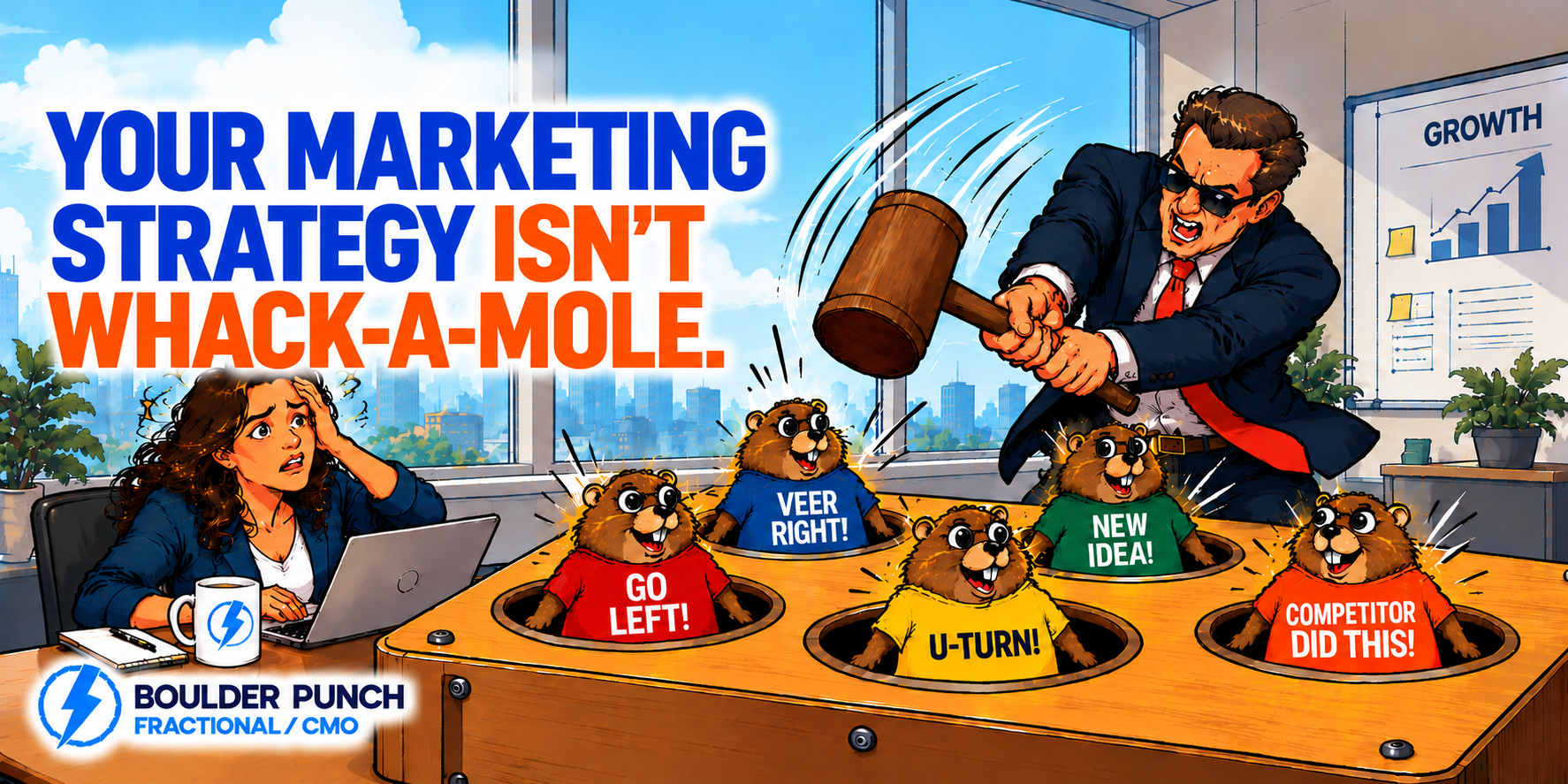
Strategy Is Supposed to Change. Priorities Shouldn’t Change Every Tuesday.
What I’ve seen create problems is something very different. The team develops a plan, agrees on the priorities, and begins executing. A few weeks later, someone on the leadership team sees what a competitor is doing and decides the company needs to respond. Then the CEO attends a conference and comes back excited about a new idea. Sales asks for a campaign around another market segment. A board member mentions a tactic that worked at another company. Someone reads about a new technology or channel and suddenly that needs to become a priority too.
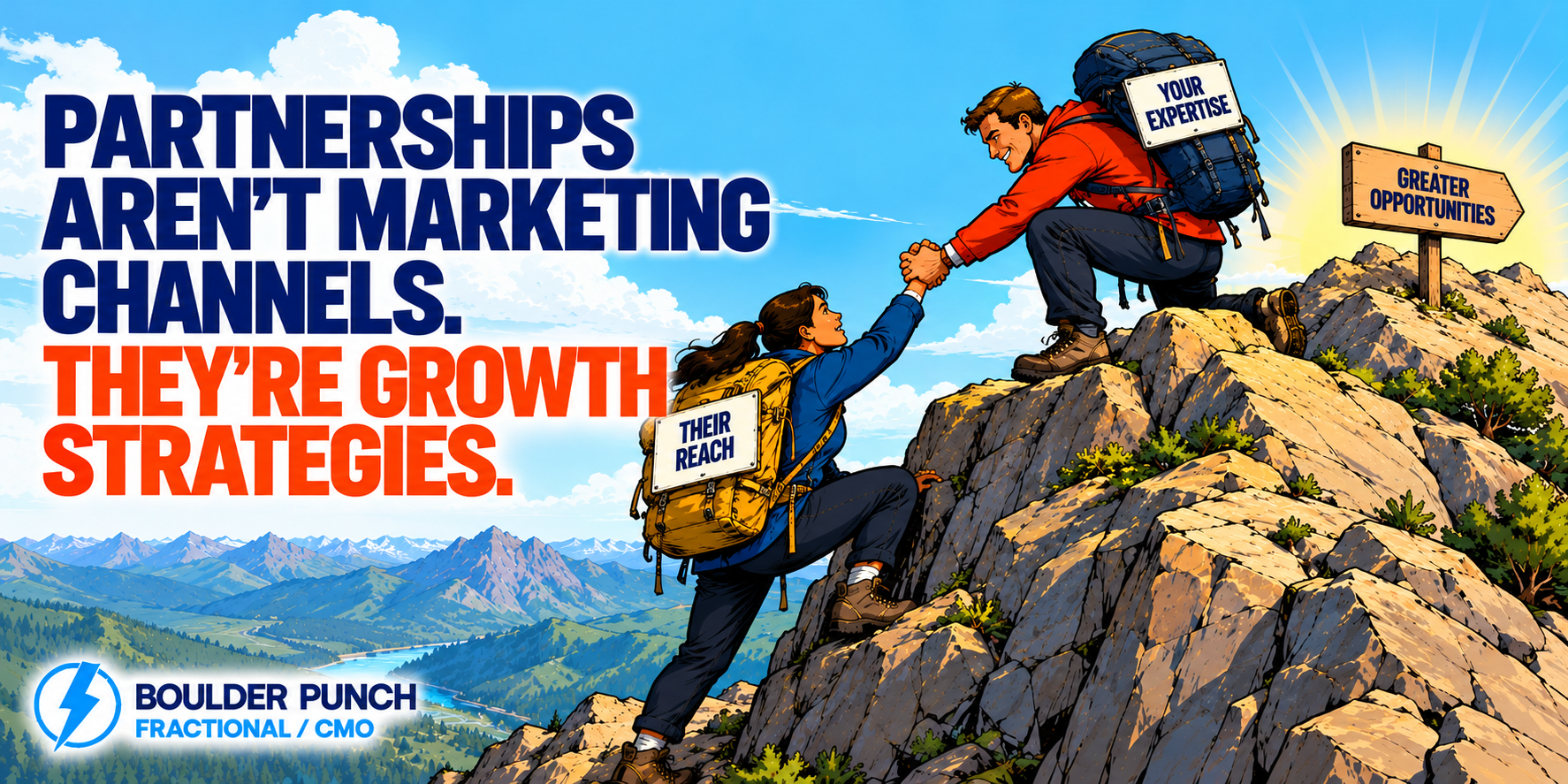
Partnerships Aren’t Marketing Channels. They’re Growth Strategies.
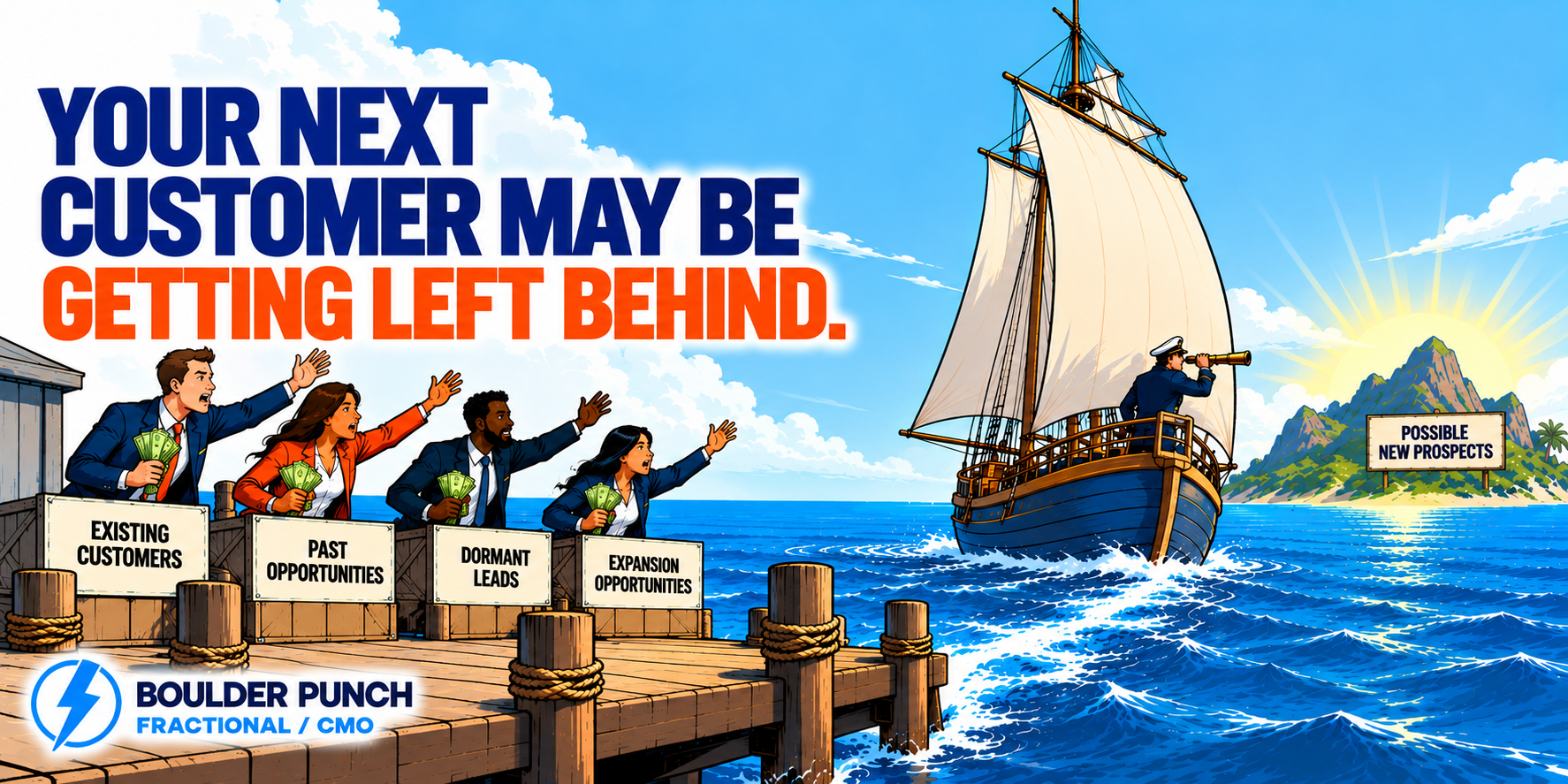
Your Best Growth Opportunity May Already Be in Your CRM
The answer is usually a much larger group than anyone initially realizes. Existing customers. Former customers. Prospects who seriously considered the company but didn’t buy. Opportunities that stalled because the timing wasn’t right. People who attended webinars or events. Former product users. Customers inherited through an acquisition. Contacts who engaged with Sales two years ago and then disappeared. Depending on the age and size of the company, there may be thousands or even tens of thousands of these relationships sitting quietly in the CRM.
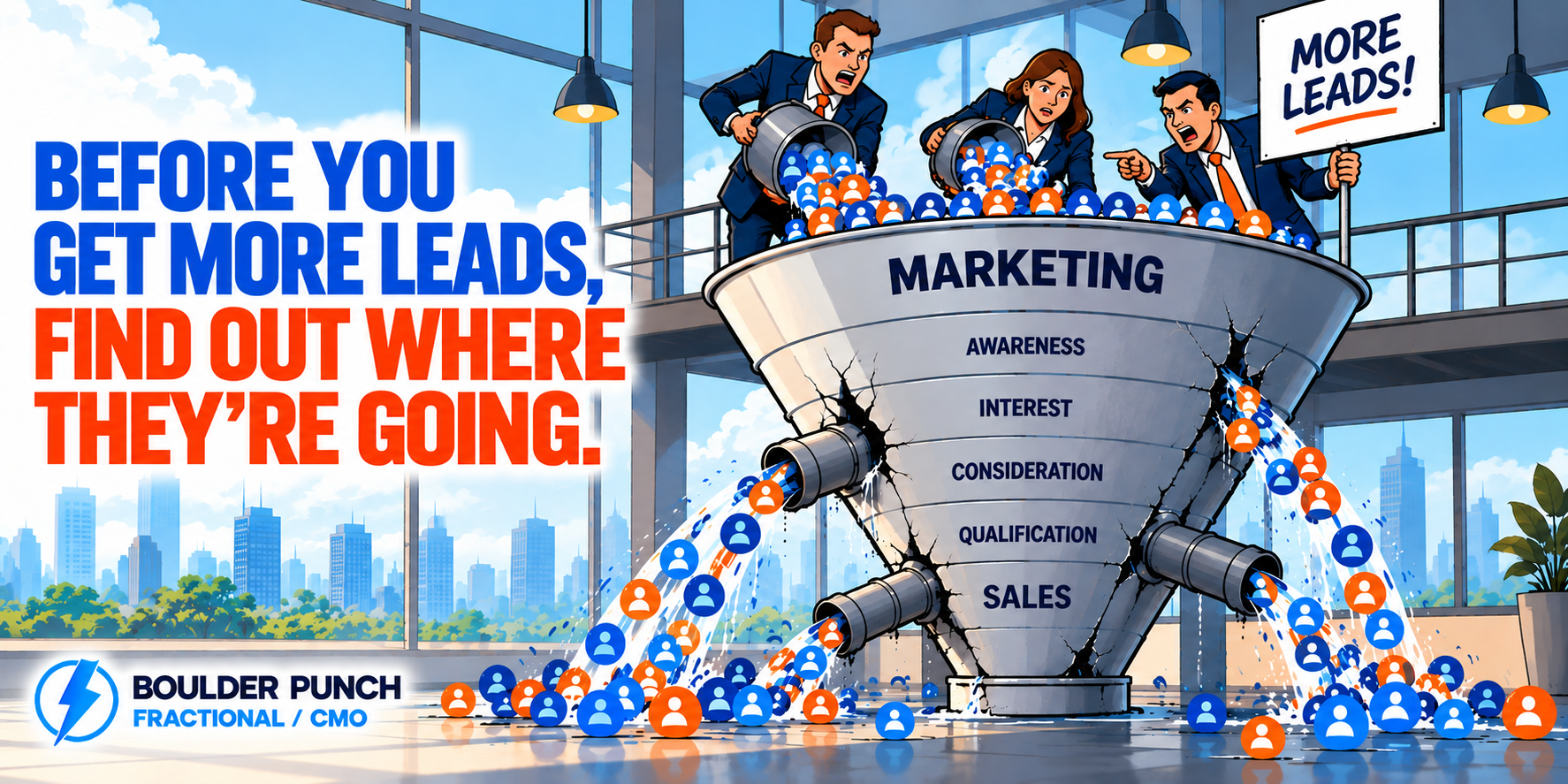
The Leads Aren’t Always the Problem
I’ve reviewed sales pipelines where leads sat untouched for days before anyone contacted them, opportunities that hadn’t been updated in months, and CRM records with no clear owner or next step. I’ve seen prospects repeatedly engage with marketing content without ever receiving meaningful sales outreach. I’ve also seen marketing teams proudly report growing MQL numbers while salespeople quietly ignored most of those leads because experience had taught them that the qualification criteria meant very little.
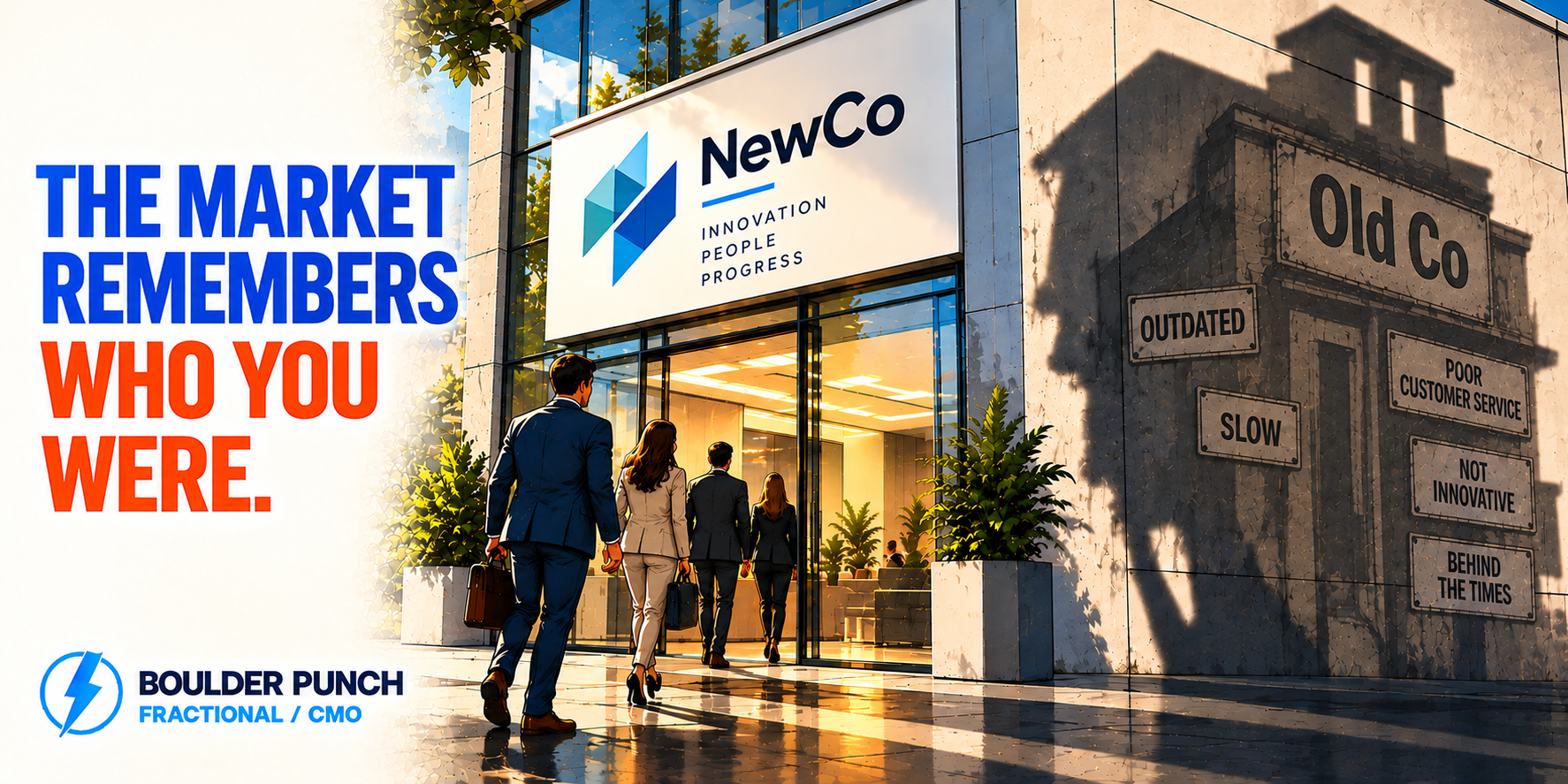
The Market Remembers Who You Were
If a services company wants to become known as a software company, customers need to see the software in action. They need demonstrations, customer stories, product experiences, reviews, industry conversations, and proof that the business genuinely operates differently. If a company wants to move upmarket, the market needs evidence that larger organizations trust it. If a specialist wants to become a platform, buyers need to experience the breadth rather than simply hear the word "platform" repeated in every piece of marketing.
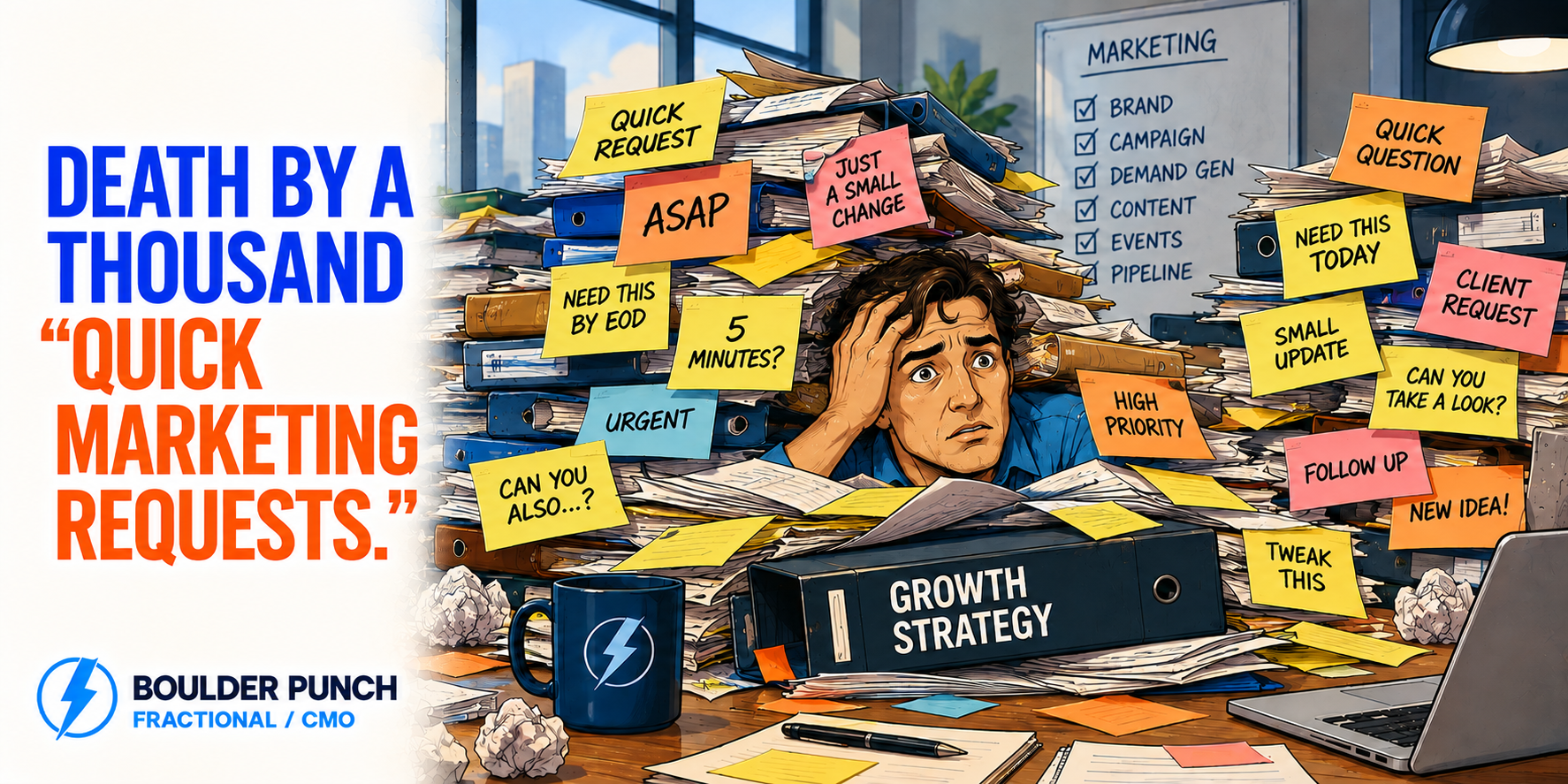
Death by a Thousand “Quick Marketing Requests”
I've found one of the most effective ways to manage these situations is to stop treating them as yes-or-no decisions and start treating them as priority decisions. Instead of saying, "Marketing can't do that," the conversation becomes, "We can absolutely do that. Here's what the team is currently committed to, and here's what we'll need to delay or stop to make room. Which is more important?"
That changes the discussion.
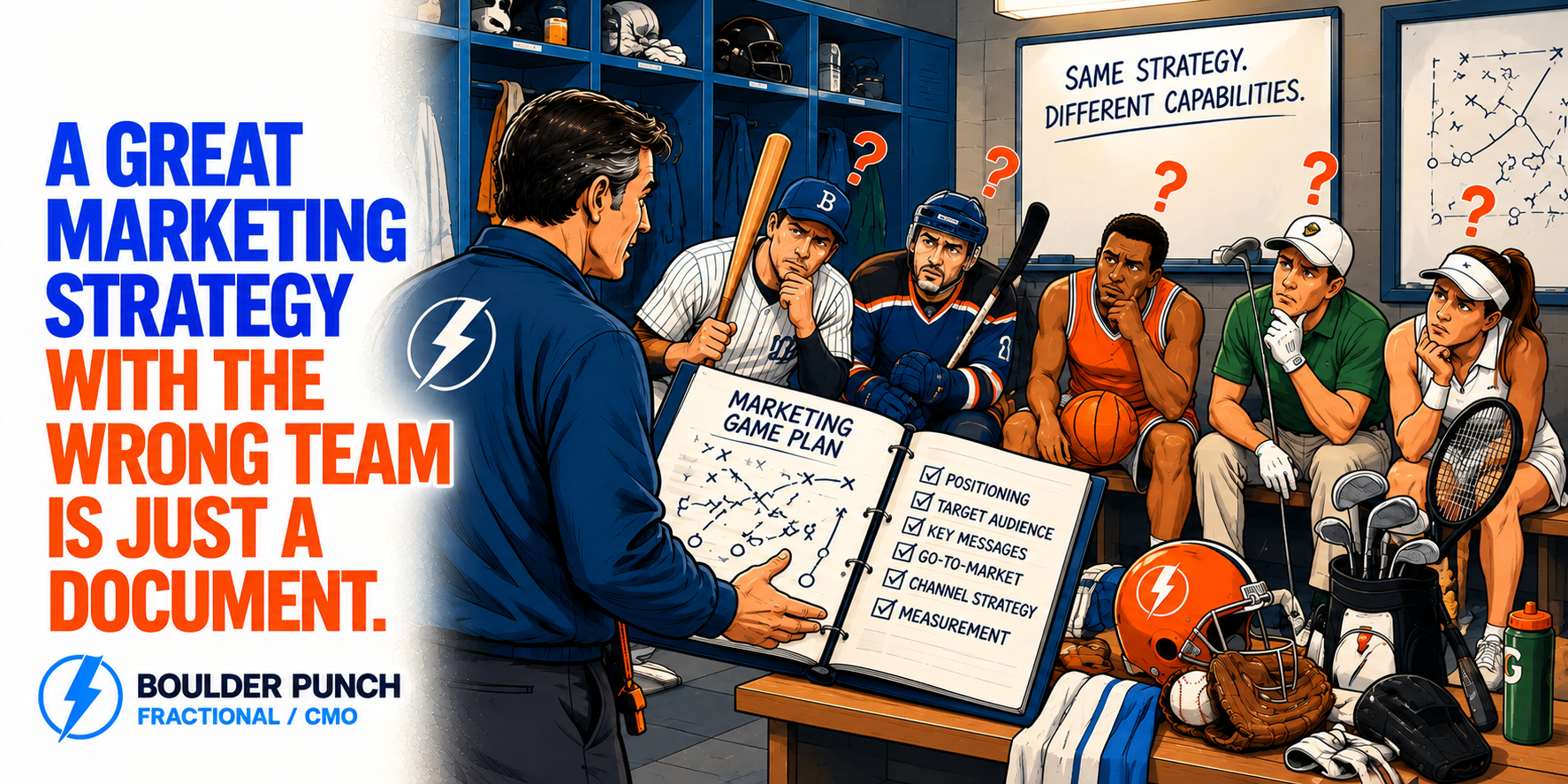
A Great Marketing Strategy With the Wrong Team Is Just a Document
It sounds obvious, but companies frequently make hiring decisions in the opposite order. Someone decides the business needs a marketing manager, demand generation specialist, content person, social media manager, or agency, and then the organization figures out what that person should be doing. I've always preferred to start with the strategy and work backward.
Once you know where you're trying to go, the capabilities required to get there become much easier to identify.

Your Employees May Be Your Most Important Marketing Channel
Think about how many people may influence a customer relationship over time. A salesperson introduces the company. An implementation specialist gets the customer started. An account manager handles the relationship. Customer service answers questions. A technician solves a problem. A receptionist answers the phone. Depending on the business, customers may interact with dozens of employees over the life of the relationship, and every one of those conversations can reinforce or undermine what marketing is telling them.

You Don’t Own Your Brand. Your Audience Does.
Your brand is what a customer thinks when your name comes up in conversation. It's what a prospect has heard about you before they ever visit your website. It's the expectations someone brings into a sales meeting based on what a colleague told them. It's how customers feel after using your product, calling customer service, dealing with an account manager, receiving an invoice, or trying to get a problem resolved.
It's also the story employees tell about the company when leadership isn't in the room.
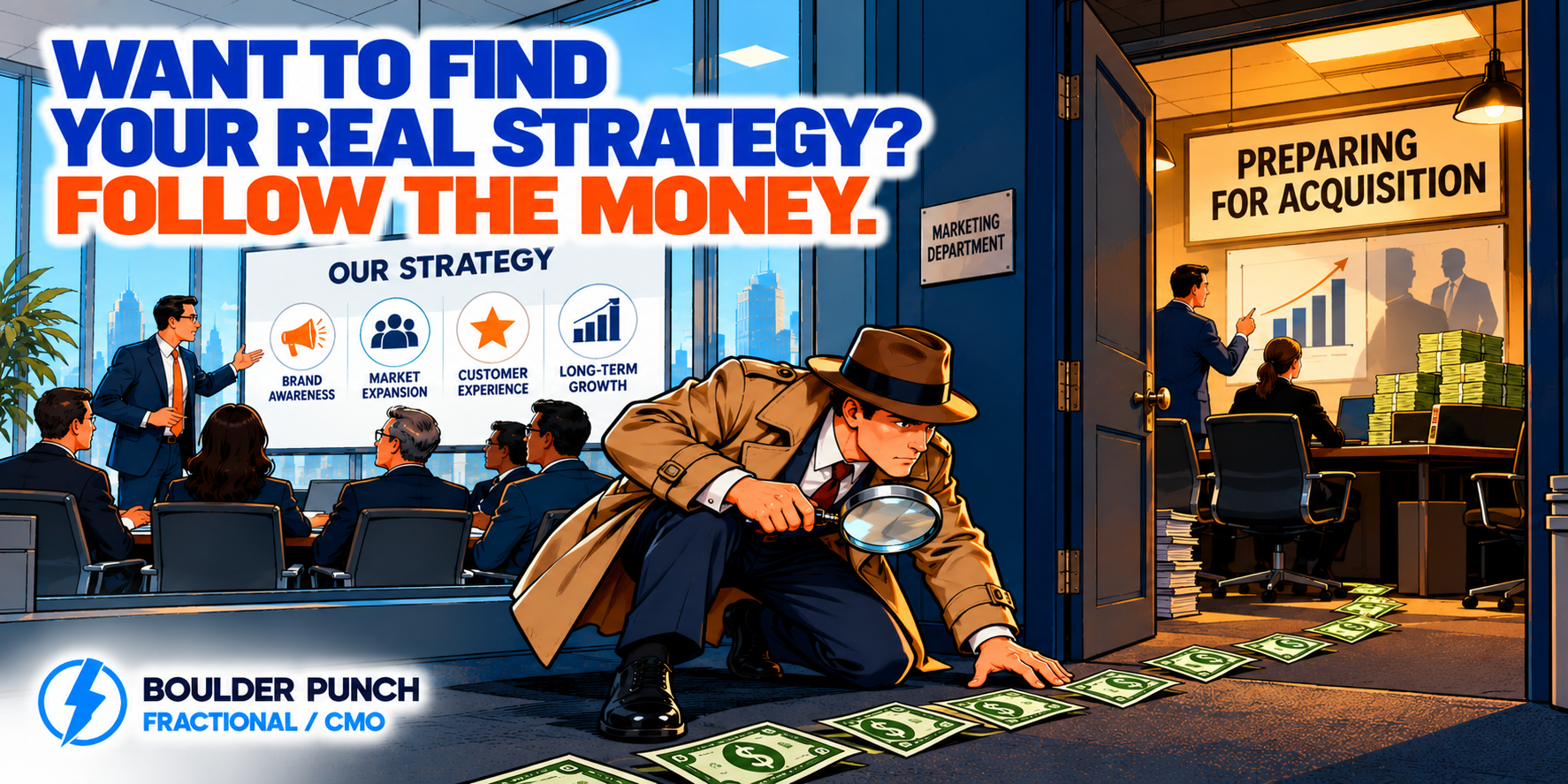
Your Marketing Budget Is a Strategy in Disguise
A company may say brand is a major priority while allocating almost nothing to customer research, creative development, content, or the people responsible for building it. Leadership may talk about retention while nearly every marketing dollar continues going toward customer acquisition. A new market may be described as strategically critical but receive whatever resources happen to be left after existing programs are funded.