When companies tell me they need help with their brand, the conversation usually starts in a familiar place. “The logo feels dated”. “The website no longer reflects what the company has become”. “The messaging isn't clear”. Sales describes the business one way while leadership describes it another. Maybe the company has expanded into new markets, introduced new products, made an acquisition, or simply outgrown the identity that worked when the business was smaller.
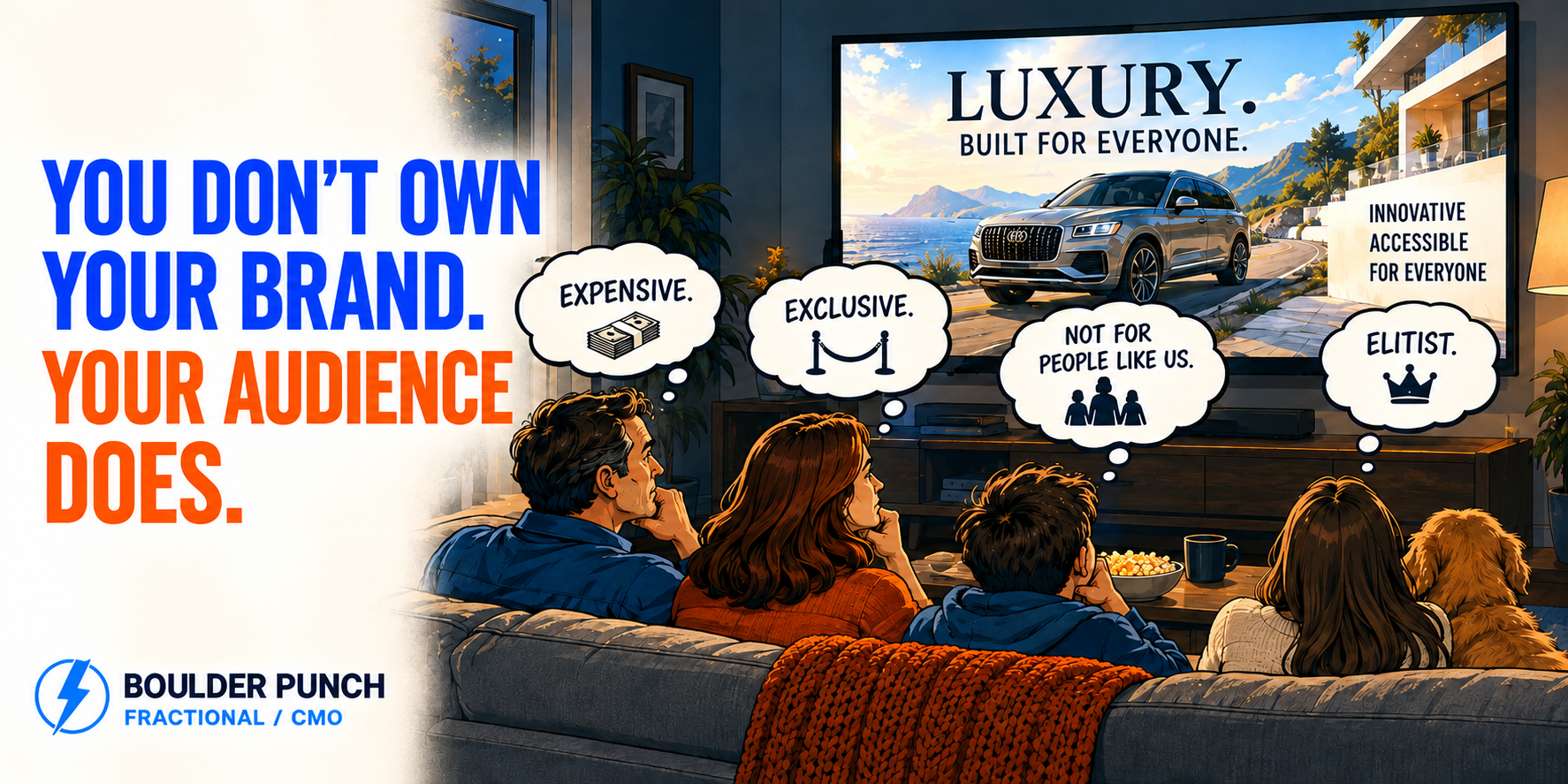
Those are all legitimate reasons to revisit a brand, but they're also where one of the biggest misconceptions about branding begins. A brand isn't a logo, a color palette, a tagline, or even the carefully crafted positioning statement everyone spent three months debating. Those things are expressions of the brand. The brand itself exists somewhere companies have far less control over; in the minds of the people who experience it.
I've always found that distinction important because businesses naturally talk about "our brand" as though they own it. In reality, companies can shape a brand, influence it, invest in it, and work incredibly hard to protect it, but they don't get the final vote, customers do. So do employees, prospects, partners, and anyone else whose experiences contribute to the company's reputation.
Your brand is what a customer thinks when your name comes up in conversation. It's what a prospect has heard about you before they ever visit your website. It's the expectations someone brings into a sales meeting based on what a colleague told them. It's how customers feel after using your product, calling customer service, dealing with an account manager, receiving an invoice, or trying to get a problem resolved.
It's also the story employees tell about the company when leadership isn't in the room.
That's why I think branding conversations become much more interesting when we stop asking, "What do we want our brand to say?" and start asking, "What do people actually experience when they interact with us?"
Companies spend enormous amounts of time deciding what they want their brands to represent. Innovative. Trusted. Responsive. Customer-focused. Easy to work with. Those words appear in brand strategies every day because they're genuinely valuable qualities. The problem is that simply declaring them doesn't make them true.
A company can describe itself as responsive, but if customers routinely wait three days for someone to return a call, responsiveness isn't really part of the brand. A software company can position its product as simple and intuitive, but if implementation takes six months and requires a small army of consultants, simplicity isn't what customers will remember. A business can talk endlessly about putting customers first, but if the experience changes dramatically the moment the contract is signed, customers will believe what happened to them rather than what they read on the website.
That's where branding stops being primarily a marketing exercise and becomes a business discipline.
Marketing certainly plays an important role because it controls many of the most visible expressions of the brand. But Sales influences the brand. Product influences it. Customer Success influences it. Operations influence it. Leadership influences it. The person answering the phone or working the front desk influences it. Every interaction contributes another piece of evidence that either reinforces what the company says about itself or contradicts it.
I've seen companies invest heavily in beautiful new identities, sophisticated websites, polished messaging, and expensive campaigns while paying far less attention to the experiences customers have once they enter the business. I've also seen companies with relatively ordinary visual identities develop incredibly loyal customers because every interaction consistently reinforces what those companies stand for. The difference isn't usually the quality of the logo. It's the consistency between the promise and the experience.
That consistency becomes even more important inside the organization. When companies go through branding or positioning exercises, most of the attention naturally turns outward. How will we introduce this to customers? What should the website say? How should Sales present it? What should the campaign look like? Those are important questions, but they overlook one of the most influential audiences a company has: its own employees.
Employees don't need to memorize positioning statements or recite an elevator pitch every time they meet a customer. In fact, I'd rather they didn't. Customers can usually tell when someone is reading from a corporate script. What employees do need is a shared understanding of what the company stands for, who it serves, why customers choose it, and what kind of experience the organization is trying to create.
That's where culture and brand begin to overlap. If your external brand promises one thing while your internal culture rewards another, eventually customers will see the contradiction. If you say relationships matter but employees are measured almost entirely on transaction volume, the numbers will win. If you promise personalized service while making it nearly impossible for customers to reach an actual person, the process becomes part of your brand whether you intended it to or not.
I've come to think of a brand as a promise the organization makes to the market. Marketing helps articulate that promise, but the rest of the company has to deliver it. That doesn't mean every interaction needs to be perfect. Companies are run by human beings. Products fail, orders get delayed, people make mistakes. In fact, some of the strongest customer relationships I've seen have come after something went wrong and the company responded quickly, honestly, and generously. How an organization behaves when things don't go according to plan can reveal more about its brand than any advertising campaign ever will.
Those experiences accumulate over time. Customers tell colleagues, employees talk to friends, reviews get posted, salespeople hear comments during prospect conversations, and partners develop opinions about what it's like to work with the organization. Eventually, thousands of small interactions create a collective perception that becomes far more powerful than anything written in a brand guide.
This is also why customer and employee research can be so valuable during a branding initiative. Ask customers why they chose you. Ask what they value most about the relationship. Talk to people who left. Listen to Sales describe the objections they're hearing. Pay attention to the language customers use when they describe the company rather than assuming they'll use the language you've developed internally.
Sometimes those conversations reveal that customers value something the company barely talks about. Other times they expose a sizable gap between what leadership believes the company represents and what customers experience. Neither discovery should be treated as bad news. They're opportunities to understand the brand that already exists before deciding how you want it to evolve.
That may be the most important distinction of all. Branding isn't about inventing a story and convincing the market to believe it. The strongest brands I've worked with usually begin with something that's already true about the organization and then make that truth clearer, more relevant, and more consistent across the business.
A strong brand eventually becomes much bigger than marketing. It influences how the company communicates, how employees behave, how customers are treated, what products get developed, what partnerships make sense, and sometimes even which opportunities the business decides to walk away from. At that point, the brand isn't something sitting in a marketing presentation. It's embedded in the culture and reflected in thousands of decisions people make every day.
That's why I get nervous when branding conversations begin and end with logos, color palettes, websites, and taglines. Those things matter. Done well, they help people recognize you, understand you, and remember you. But they're expressions of something deeper.
Your real brand is the collection of expectations, emotions, memories, and experiences people associate with your company. You can influence those perceptions. You can work deliberately to shape them. You can create a compelling promise and build an organization capable of delivering it.
But you don't own the final interpretation. Your audience does.