"We've Always Done It That Way" Is Not a Marketing Strategy
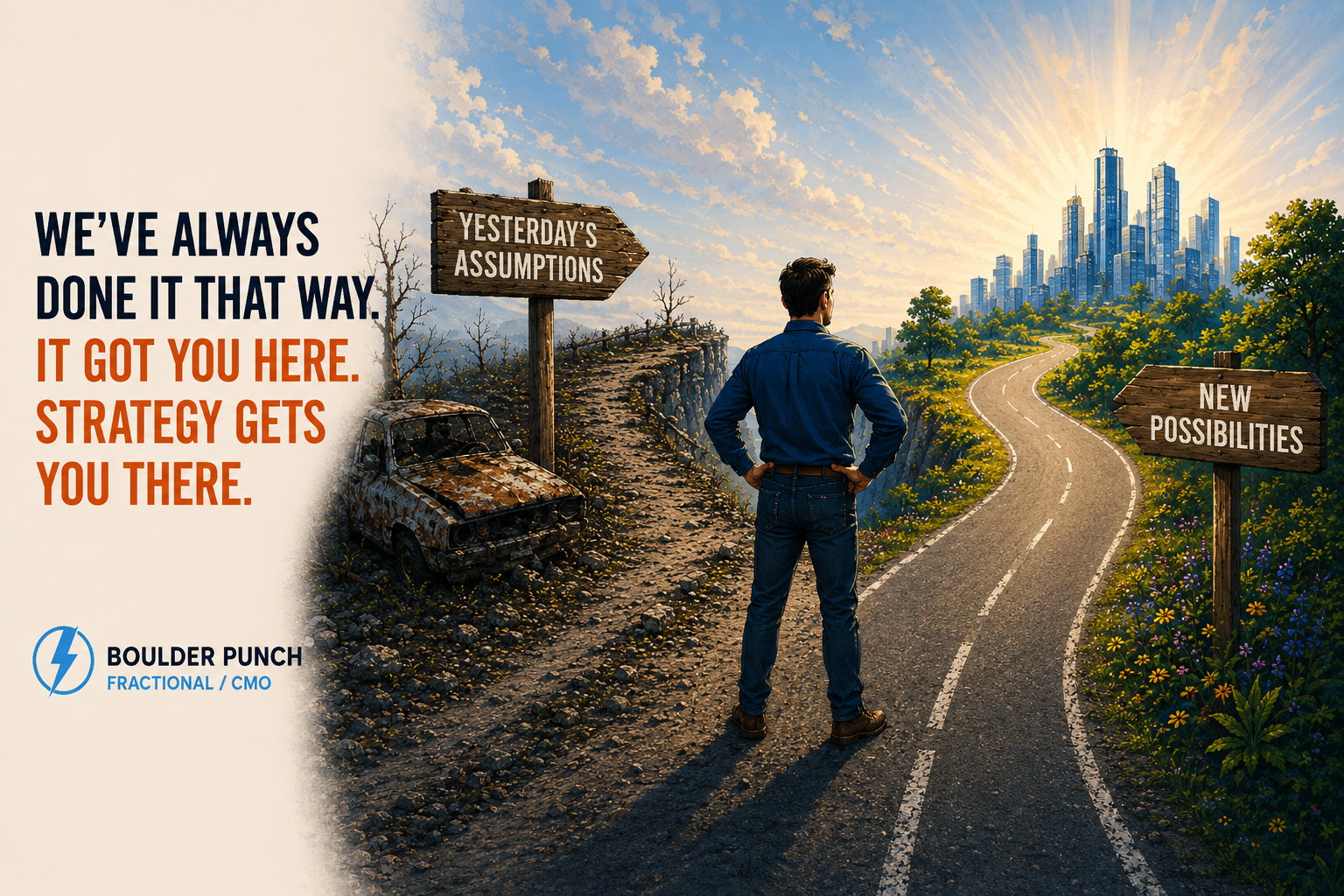
One of the questions I find myself asking clients more often than almost any other is surprisingly simple:
"If you were starting this company today, would you build your marketing program the same way?"
The room usually gets quiet.
Not because people disagree with the question, but because they've never really stopped to think about it. Most organizations don't consciously decide to keep doing the same things year after year. They simply inherit yesterday's decisions. Trade shows remain in the budget because they've always been there. A webinar series continues because it once generated opportunities. Paid campaigns renew automatically because no one wants to be responsible for turning them off. Before long, yesterday's strategy quietly becomes today's operating model.
I recently worked with a manufacturing company that had been in business for more than sixty years. They had talented people, respected products, and a marketing department that stayed incredibly busy. The problem wasn't effort. Over time, marketing had gradually evolved into an internal creative services team, producing brochures, presentations, trade show materials, sales collateral, and internal communications for other departments. Everyone appreciated the support, but very little time remained for market research, competitive analysis, customer insights, demand generation, or long-term brand strategy. The shift had happened so gradually that no one questioned it. Marketing had become exceptionally good at serving the organization while spending less time serving the market.
That experience reinforced something I've observed throughout my career. Most organizations don't become stagnant because people resist change. They become stagnant because yesterday's priorities quietly become today's routines. When everyone is focused on execution, very few people step back to ask whether they're still solving the right problems.
One of the healthiest exercises a leadership team can undertake is pretending they're building the company from scratch. If you had today's customers, today's competitors, today's technology, and today's budget, would you still attend the same conferences? Invest in the same channels? Structure your marketing team the same way? Position your products the same way? Or are some of those decisions simply surviving because no one has challenged them recently?
I've found those conversations often reveal opportunities that dashboards never will. A campaign that once generated exceptional returns may now be producing diminishing results. A trade show that was once essential may no longer attract your ideal buyers. At the same time, entirely new opportunities may exist that weren't even available when your current strategy was developed.
That doesn't mean successful companies should constantly chase the latest trend or abandon every tactic that has worked in the past. Consistency matters, and many proven strategies deserve continued investment. The objective isn't to replace what works. It's to distinguish between what is working today and what merely worked yesterday. Those are two very different conversations.
Sometimes the greatest value an outside marketing leader brings isn't a revolutionary idea or another campaign. It's the ability to ask questions that everyone inside the organization has quietly stopped asking. Internal teams naturally develop assumptions over time. That's human nature. A fresh perspective challenges those assumptions, encourages healthy debate, and helps leadership separate habit from strategy before habit begins to define the strategy.
One of the responsibilities of experienced marketing leadership is creating the discipline to ask those questions before growth begins to stall. It's easy to become consumed by quarterly goals, campaign execution, and the next deadline. It's much harder to create space for reflection, challenge long-held assumptions, and determine whether the business is still solving today's problems with yesterday's strategy. Those conversations rarely happen on their own. Someone must initiate them, facilitate them, and ensure the conclusions translate into meaningful action.
Looking back over my career, I've found that the organizations that sustain growth aren't necessarily the ones with the biggest budgets, the most sophisticated technology, or the longest list of marketing tactics. They're the ones that remain intellectually curious. They encourage healthy debate. They revisit assumptions. Most importantly, they're willing to let go of ideas that made them successful in one stage of growth so they can embrace the opportunities that will define the next.