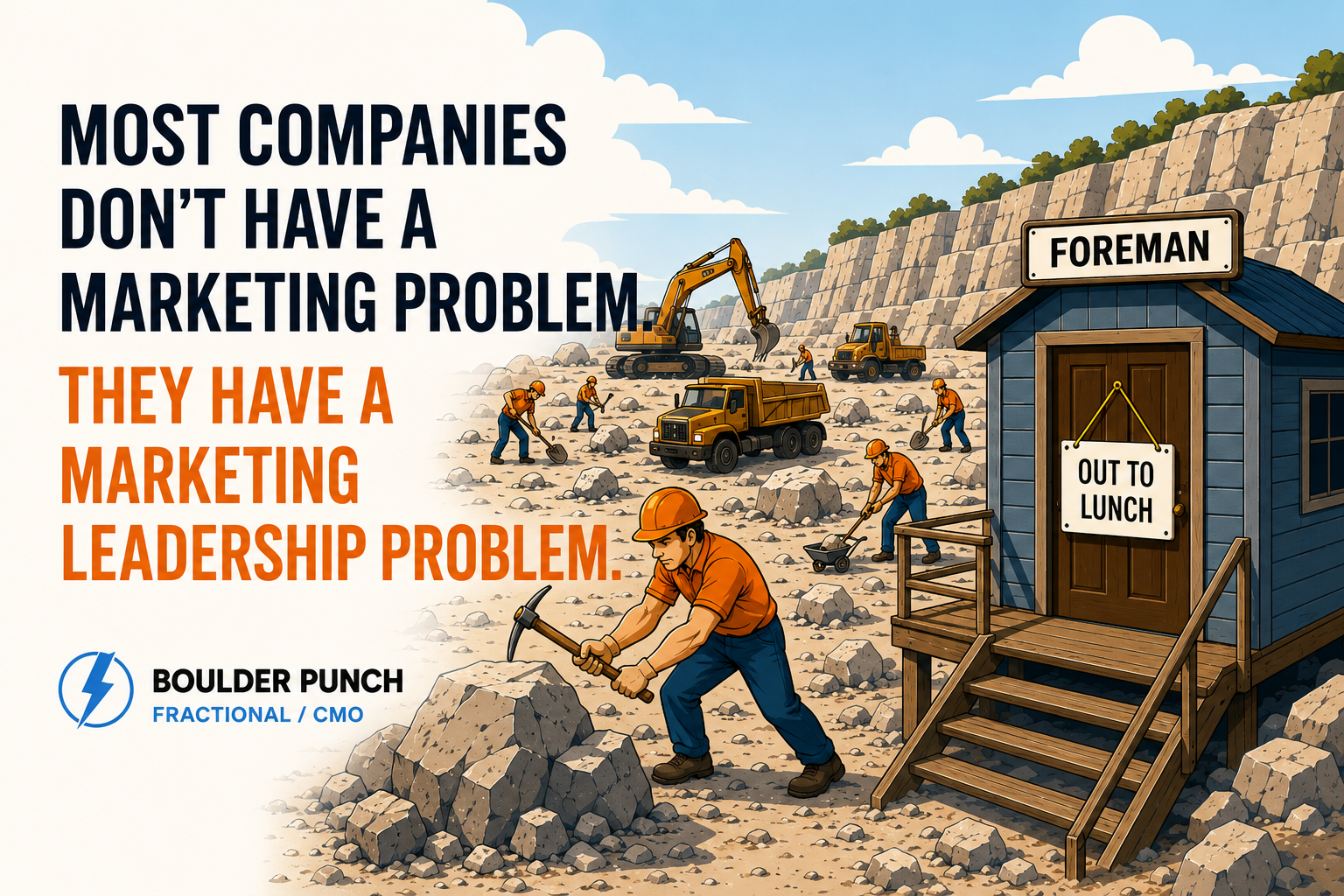
Most Companies Don't Have a Marketing Problem. They Have a Marketing Leadership Problem.
One of the most common things I hear from founders is, "We're doing everything we're supposed to be doing. So why has growth slowed down?"
It's a fair question.
Marketing is active. Campaigns are running. Agencies are producing content. Trade shows are booked. Sales has leads to follow up on. On paper, everything looks healthy. Yet pipeline feels inconsistent, deals take longer to close, and the tactics that once generated predictable growth don't seem to be working as well anymore.
The instinct is usually to look for another tactic. Maybe it's time to invest more in SEO, launch a podcast, hire a demand generation agency, increase paid media, or try the latest AI tool. Those initiatives may all have merit, but they rarely address the underlying issue.
Often, the problem isn't marketing execution. It's marketing leadership. There's an important difference between the two.
Execution is about doing the work. Leadership is about deciding what work is worth doing in the first place. It's asking whether your ideal customer has changed, whether your positioning still reflects the market, whether your messaging is helping sales, and whether your marketing investments are aligned with the business you're trying to build over the next three years, not the one you built over the last three.
Those aren't campaign questions. They're leadership questions.
This becomes especially common in founder-led companies. Early on, founders are usually the best marketers in the business because they're closest to customers. They hear objections firsthand, shape the messaging, close deals, and develop an intuitive feel for the market. It's one of the reasons young companies can move so quickly.
As the business grows, however, the founder's role inevitably changes. Hiring, product development, operations, financial planning, investors, and culture all begin competing for attention. Marketing often remains tied to the founder because that's how the company has always operated. Every major decision still flows through one person whose calendar is already full.
Eventually, the organization slows down. Not because people lack talent or effort, but because the business has outgrown the way decisions are being made.
I've seen this pattern more times than I can count. Marketing teams become busy but not necessarily effective. Agencies continue delivering work without anyone stepping back to ask whether the strategy still fits the market. New initiatives get added while older ones remain in place because no one has time to evaluate what should stop.
The result isn't a lack of activity. It's a lack of focus.
One of the most valuable things an experienced marketing leader brings to a company isn't another campaign or another channel. It's perspective. Someone who can connect customer insights, sales feedback, competitive shifts, product direction, and business objectives into a strategy that gives the rest of the team clarity about where to invest time and resources. That's difficult to do when everyone is focused on execution.
The companies that continue growing aren't necessarily the ones doing more marketing. They're the ones making better marketing decisions. That's an important distinction.
As businesses mature, growth becomes less about adding tactics and more about making deliberate choices. What should we continue doing? What has stopped working? What does the market need from us now? And where can we create the greatest impact with the resources we have?
Those questions don't usually appear on a marketing dashboard. But they're often the questions that determine what happens next.