Great Marketing Is Really Applied Psychology
I've had the opportunity to work across a wide range of industries throughout my career. Automotive. Healthcare. Technology. Politics. Professional services. Benefits. Home services. At first glance, they don't appear to have much in common. Different buyers. Different regulations. Different sales cycles. Different products.
Ironically, one of the earliest lessons I learned about marketing didn't come from the corporate world at all. It came from politics. Working on political campaigns, I quickly realized that people rarely vote based solely on policy. They vote based on trust, identity, hope, fear, and the belief that a candidate understands their concerns. Years later, after working across healthcare, automotive, SaaS, and professional services, I realized business buying isn't nearly as different as we like to think.
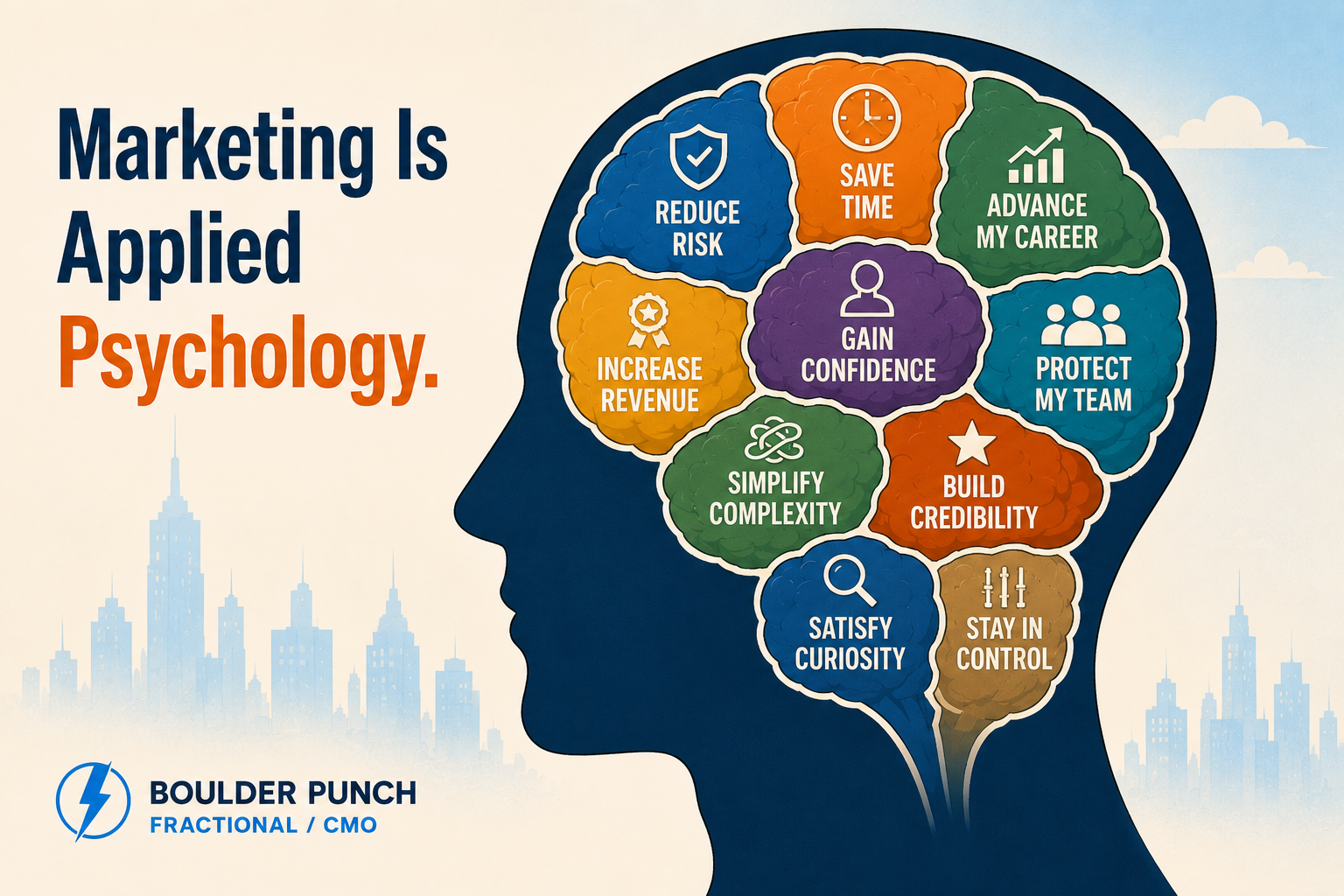
People buy for remarkably similar reasons. They want to solve problems. They want to reduce risk. They want to avoid making mistakes that could reflect poorly on them. They want confidence that they're making the right decision. Sometimes they want to save money. Sometimes they want to make money. Often, they simply want reassurance that someone understands what they're trying to accomplish and has successfully helped others do the same.
That's why I've always believed one of the most important principles in marketing is surprisingly simple:
People make decisions emotionally and justify them rationally.
We often assume B2B buyers operate entirely on logic because they're spending company money. They’re still human beings. They worry about making the wrong decision. They wonder how a failed implementation might affect their credibility. They seek validation from colleagues. They want confidence that the company they're choosing understands their business and won't create new problems. Whether they're buying software, selecting a service provider, or evaluating a strategic partner, emotion almost always enters the decision long before logic begins justifying it.
One of the ways I see companies get this wrong is by oversimplifying their audience. They'll tell me, "Our target customer is the CIO," or "We sell to HR Directors," as though everyone with the same title thinks the same way. Titles tell you very little about how someone buys. A first-time marketing director at a 40-person startup doesn't evaluate risk the same way as a seasoned CMO leading a global organization. A founder approaches decisions very differently than a professional CEO. Buying behavior changes based on company size, organizational culture, reporting structure, budget, years of experience, internal politics, and even whether someone has been burned by a similar purchase before.
That's why I place so much emphasis on developing meaningful audience personas before building a marketing strategy. A good persona isn't simply a job title or a demographic profile. It's a way of understanding how people think. What pressures are they under? How is success measured in their role? What risks are they trying to avoid? Who influences their decisions? What objections are likely to surface? How does company culture shape the buying process? Those answers shape messaging far more than a title ever could.
Applied psychology is really empathy informed by research. It's the discipline of understanding not just who your customers are, but how they think, what motivates them, what concerns them, and how they make decisions. The better we understand the people we're trying to serve, the more relevant our marketing becomes. We stop talking about what we want to sell and start addressing what customers need to hear.
Marketers, however, tend to overcomplicate this. We spend enormous amounts of time debating channels, attribution models, automation platforms, AI tools, campaign metrics, and the latest marketing technology. Those things matter, and they're valuable. But they all sit downstream from a much more fundamental question:
Do you truly understand how your customer thinks?
The best marketing I've seen rarely begins by talking about products. It begins by demonstrating empathy. It shows that you understand the customer's environment before introducing your solution. It speaks to frustrations they're already experiencing instead of trying to invent new ones. It reduces uncertainty, builds confidence, and gives buyers enough information to move forward without overwhelming them with features, jargon, or endless proof points.
Marketing isn't therapy, but it does require curiosity about human behavior. Great marketers spend as much time trying to understand what motivates people, what creates hesitation, and what ultimately gives them the confidence to act as they do learning the latest technology or marketing channel. Those insights are often the difference between messaging that's simply heard and messaging that genuinely resonates.
The channels we use will continue to change. AI will reshape workflows. Search behavior will evolve, and new platforms will emerge. Human psychology, however, evolves much more slowly. That's why I believe the companies that consistently outperform their competitors aren't necessarily the ones with the biggest budgets or the newest technology. More often, they're the ones that understand their customers better than anyone else.
Great marketing has never really been about campaigns.
It's always been about understanding people.