Trade Shows Aren't Broken. Your Strategy Might Be
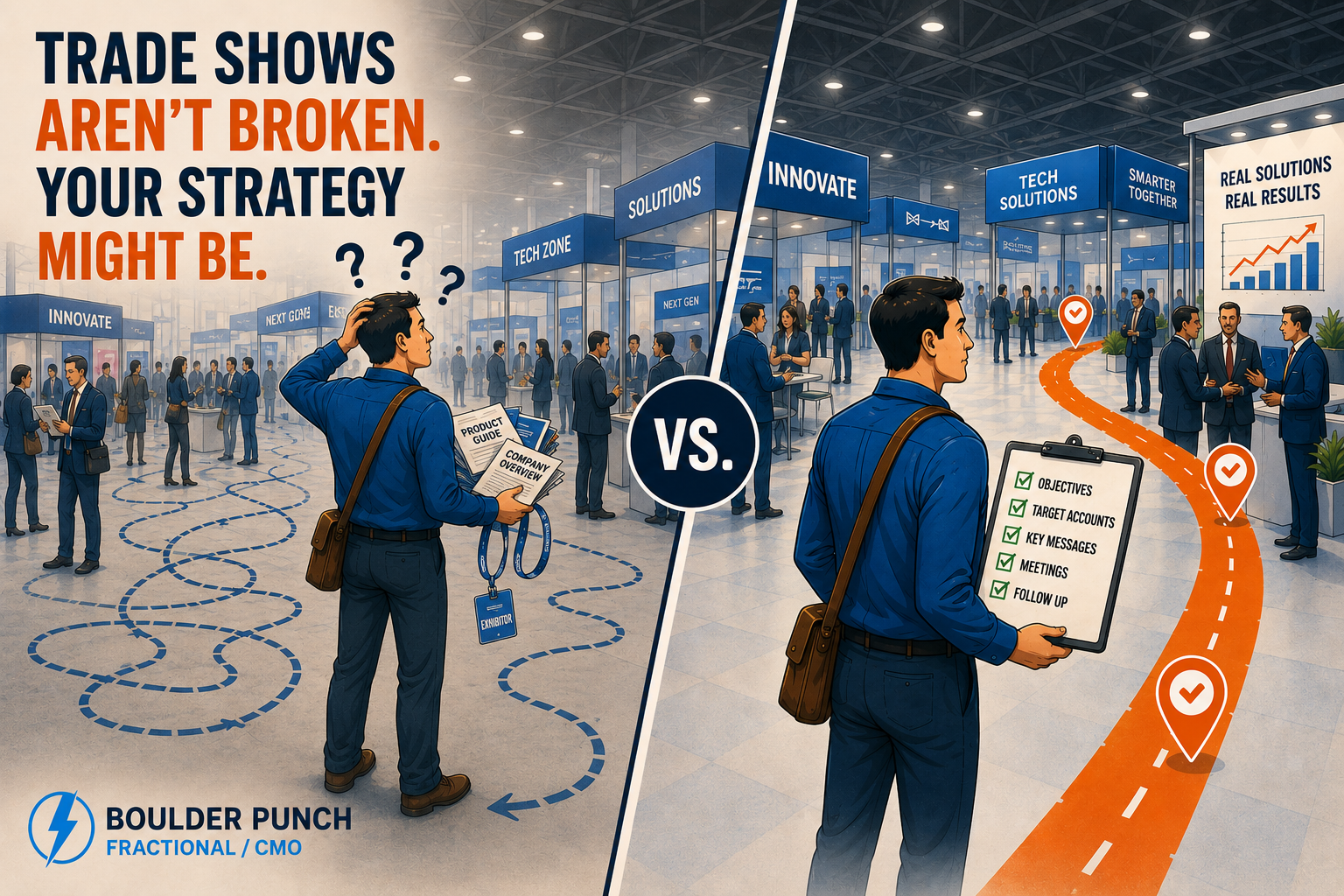
Every few months I come across another article declaring that trade shows are dead. The argument is usually the same. They're expensive, difficult to measure, time-consuming, and increasingly unnecessary in a world where buyers can research vendors, attend webinars, schedule demos, and consume endless amounts of content without ever leaving their office.
I've never fully bought into that narrative. Not because trade shows are perfect, but because I think many companies misunderstand what they're designed to accomplish.
Throughout my career, I've worked in industries where relationships still matter. Automotive. Healthcare. Industrial manufacturing. Technology. Professional services. While every market is different, they all have one thing in common: trust still influences buying decisions. People want conversations that don't fit neatly into a thirty-minute Zoom meeting. They want to shake hands, ask questions, and look someone in the eye before making a decision that could affect their business or even their own reputation.
The mistake isn't attending trade shows. It's expecting them to generate demand on their own. Conferences can certainly create opportunities, but asking one event to solve pipeline challenges is like asking your website to close every deal. It plays an important role, but only as part of a much larger growth strategy.
I've watched companies spend six figures exhibiting at major industry conferences only to come home with a stack of badge scans, a handful of business cards, and a folder full of photos for LinkedIn. Everyone reports that booth traffic was strong and conversations were plentiful, yet six months later leadership is still struggling to identify meaningful pipeline or revenue that can be traced back to the event.
I've also seen the opposite. The companies that consistently outperform don't rely on booth traffic alone. They identify target accounts months before the event and begin scheduling meetings well before anyone boards a plane. They use email, LinkedIn, and customer outreach to let prospects know where they'll be and why it's worth stopping by. Many host customer dinners, executive roundtables, or networking events away from the exhibit hall where conversations are easier and more meaningful. After the event, they continue the campaign with personalized follow-up, educational content, webinars, and sales outreach.
What always surprises me is how many organizations will invest tens or even hundreds of thousands of dollars exhibiting at a trade show yet spend almost nothing promoting the fact they'll be there. If your best prospects don't know you're exhibiting until they happen to walk past your booth, you're relying far too much on chance. The highest-performing exhibitors understand that success starts long before the exhibit hall opens.
I saw this firsthand during my years leading marketing for the Philadelphia Home Show. The exhibitors who consistently generated the strongest results weren't necessarily the ones with the biggest displays or the flashiest giveaways. They promoted their participation before the event, gave homeowners compelling reasons to visit their booth, and treated every conversation as the beginning of a relationship rather than the end of a sales pitch. The show itself created opportunities, but everything that happened before and after those three days ultimately determined the return on their investment.
That's because trade shows rarely create relationships from scratch. They accelerate relationships that are already beginning to form by compressing months of emails, phone calls, LinkedIn conversations, and virtual meetings into a few days of face-to-face interaction. The event isn't the strategy. It's one milestone within a much larger campaign.
The same principle applies to every marketing channel. Websites educate. Content builds credibility. Email nurtures relationships. Advertising creates awareness. Sales converts interest into opportunity. Trade shows simply perform a different job by accelerating trust in ways digital channels often can't.
Like most things in marketing, context matters. If your buyers no longer attend industry conferences, that's important to understand. If they still value networking, peer recommendations, product demonstrations, and face-to-face conversations, trade shows may continue to play an important role in your growth strategy. The question isn't whether trade shows still work. It's whether you're asking them to accomplish something they were never designed to do.
Trade shows aren't broken. Your strategy might be.